Why Is There No Universal Rule?
Water content, salt, acidity, oil, processing, and packaging can all differ between chili sauces, so storage conditions and quality after opening differ too. A product that can be kept at room temperature before opening may not be suitable for room-temperature storage afterward.
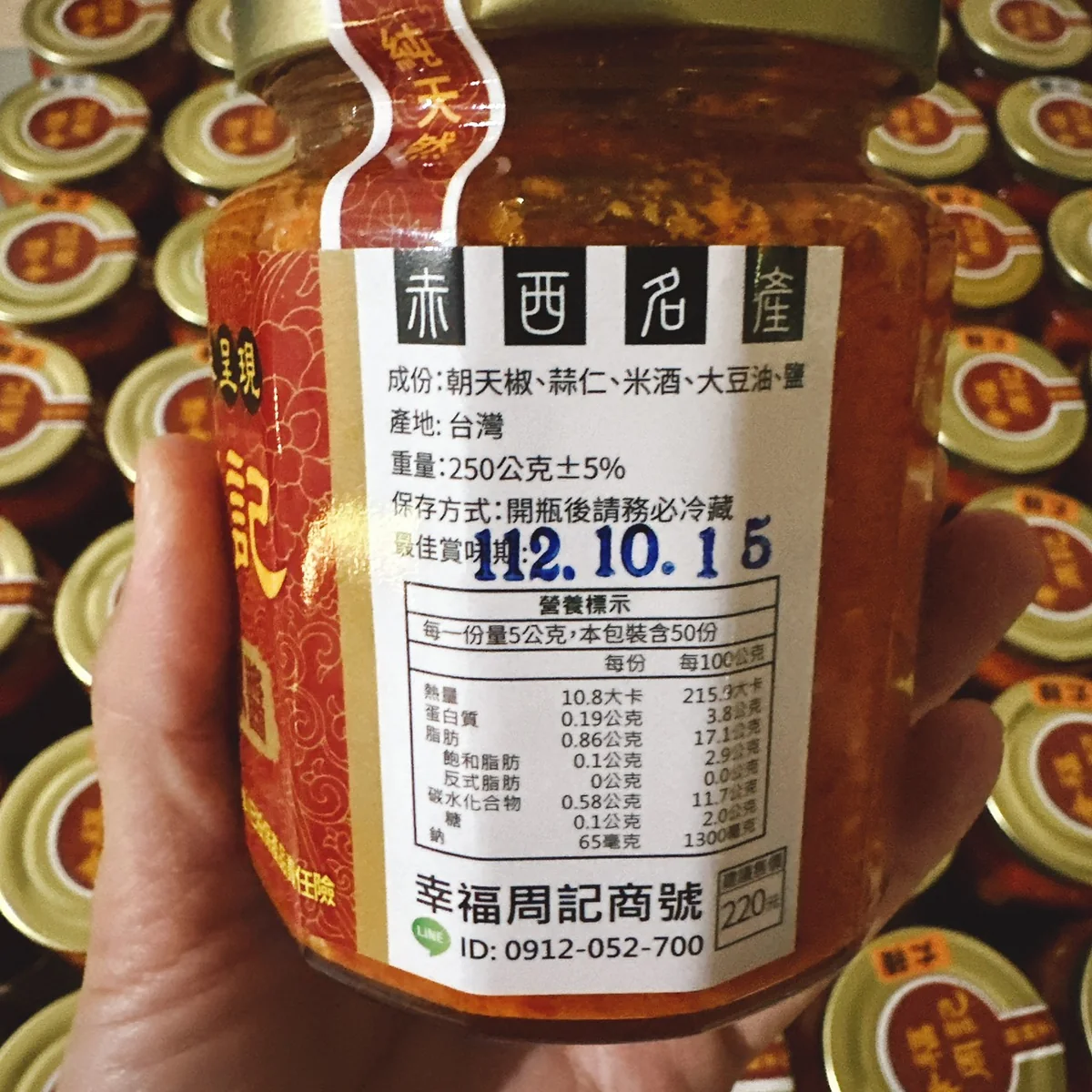
Current Storage Reminder for 幸福周記
The current product page for 幸福周記 Heritage Handmade Chili Sauce states “Refrigerate after opening.” After purchase, follow the label on the bottle you receive and check the expiration date and package condition.
5 Things to Do After Opening
- Note the opening date so you do not lose track of how long it has been open
- Use clean, dry utensils each time to reduce cross-contamination
- Close the lid promptly after use and avoid prolonged exposure at room temperature
- Refrigerate or store as directed on the bottle
- If you see mold, unusual odors, abnormal bubbling, leakage, or package swelling, do not eat the product
The Expiration Date Is Not a Countdown Guarantee After Opening
An expiration date assumes the product is stored under its specified conditions. Once food is opened and exposed to the environment and utensils, conditions change, so store it appropriately for the product and consume it promptly.
References:Taiwan FDA — Principles for Storing Food After Opening
Related Reading
This article provides general shopping, storage, and cooking information and does not replace the product label, manufacturer instructions, or professional food-safety advice. Brands, formulas, and batches may differ; always follow the actual product for ingredients, allergens, expiration date, and storage.